

Custom Furniture Designed to Solve a Problem
Nearly every project we work on includes one or two pieces of custom furniture.
Sometimes the piece a room needs simply doesn’t exist to buy.
Interior design, at its core, is problem solving. Before any sketch happens, the question is what the client needs from a space and how they actually live in it. Occasionally, nothing on the market answers that question, and that’s when custom comes in.
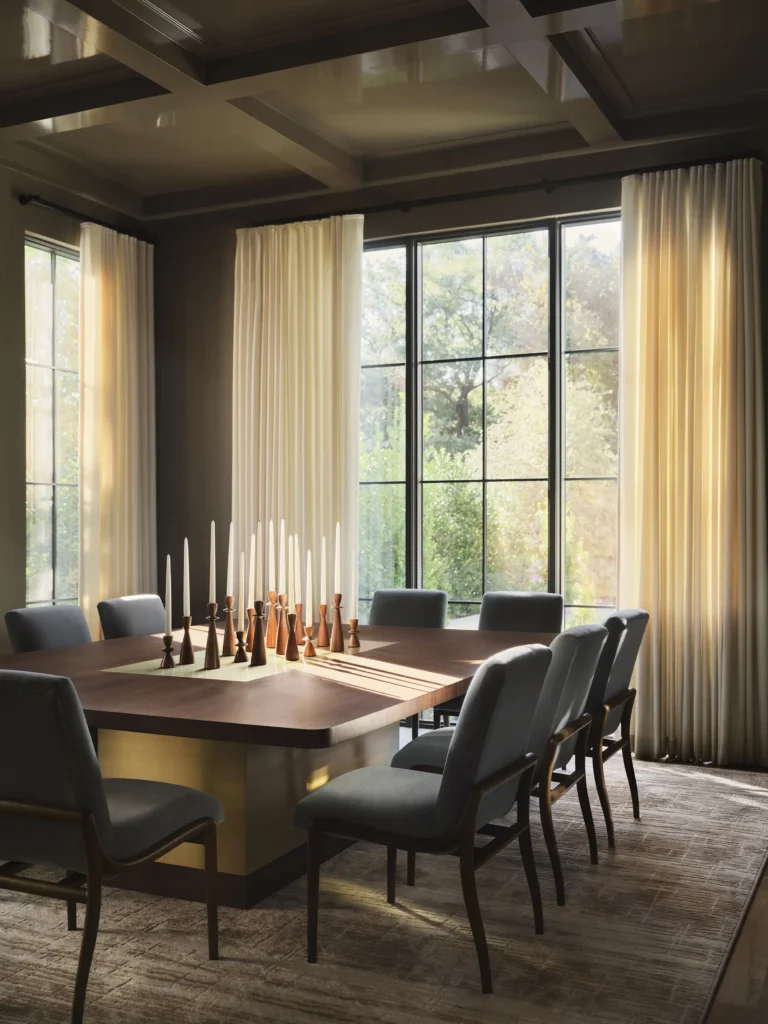
That was the case in a recent dining room. The client wanted seating for ten guests, but the room’s proportions ruled out both a long rectilinear table and a large round one. So the studio designed a table specific to the space: a walnut top with a brass inlay base, built to the exact dimensions the room and the family required.
How a Custom Furniture Piece Comes Together
Custom pieces go through the same rigor as anything else in the plan. It starts with the floor plan, since every dimension and sightline shapes what a piece needs to do. From there, quick trace-paper sketches explore form, followed by a 3D model to lock in proportions, materials and construction details. The piece only enters the design once that model is resolved.
We are creating something that solves the problem for our clients, but also something that’s really interesting and different that we can’t procure from somewhere else.
A Custom Headboard, Built Around the Room
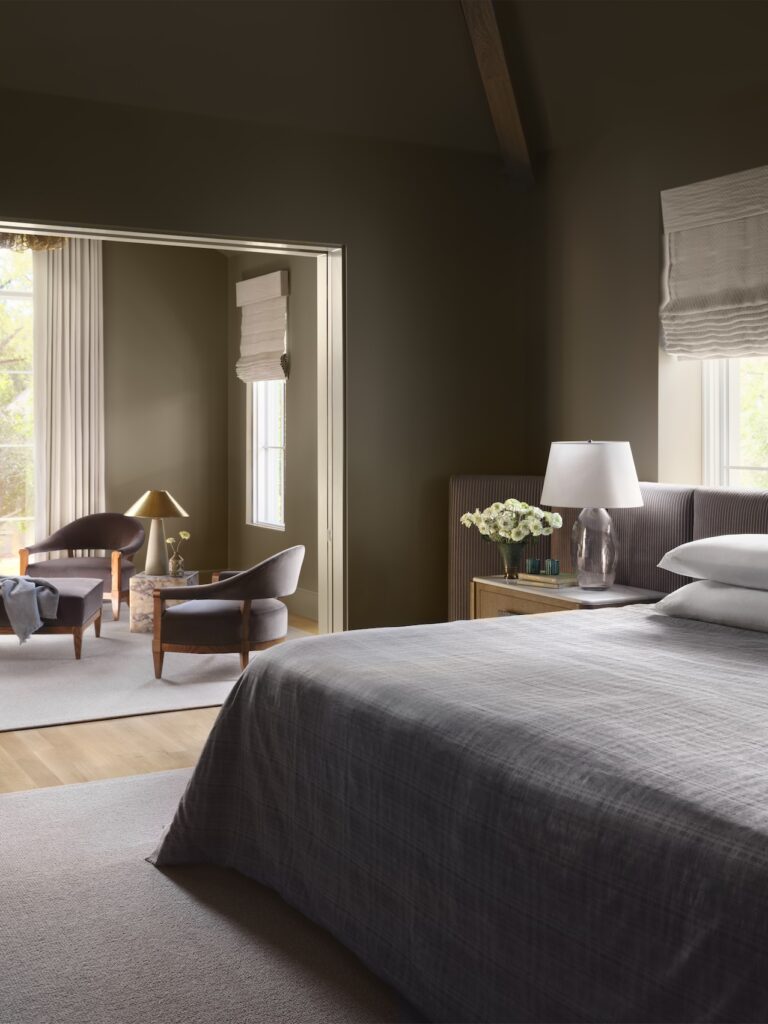
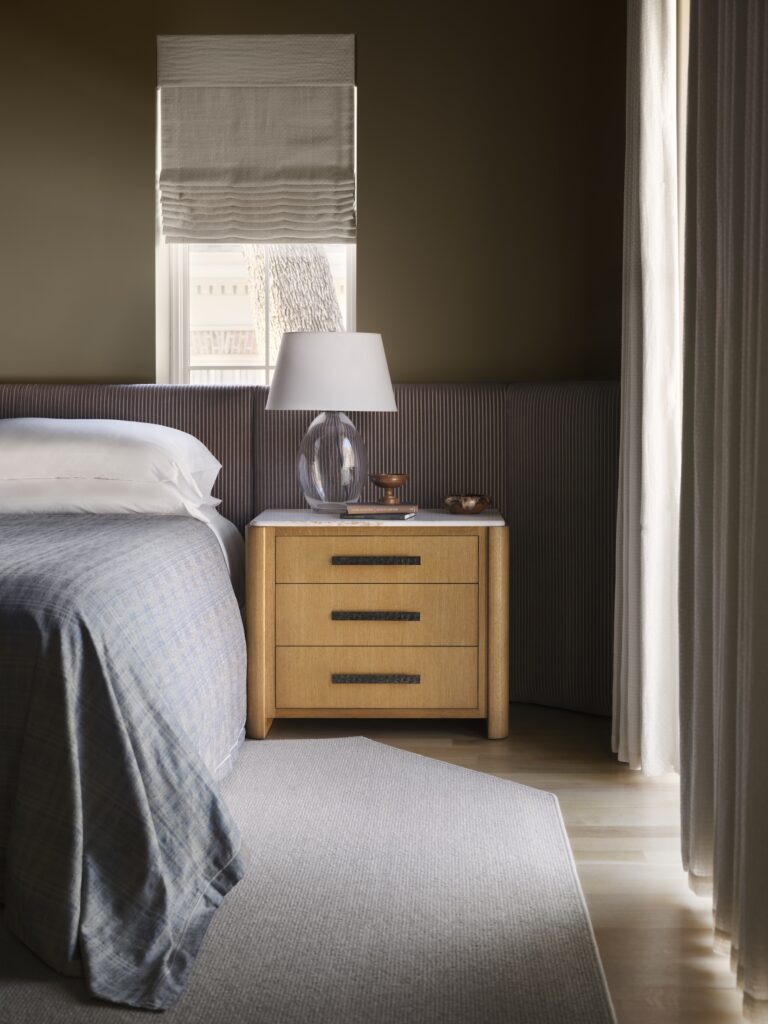
Not every custom piece is a statement. In one primary suite, a client wanted a bed larger than the room’s existing windows and nightstands had been designed for. The studio built a custom headboard sized to the new bed, positioned to work with the windows rather than block them. A quieter version of the same idea: the piece removes friction a pre-made one couldn’t.
Furniture That Reads as Part of the Room
A client who can’t pick out which piece in a room was custom-built isn’t a missed opportunity. It’s the point. The goal was never to spotlight one object, but to make the whole space feel considered and specific to the people living in it. Going custom takes a bit more time and collaboration, but the payoff is a piece built entirely around how a family actually lives.
Custom furniture doesn’t need to announce itself as custom. In many cases, the best piece is the one that feels as though it could only ever have belonged in that room. Its proportions work with the architecture, its materials sit naturally alongside the rest of the palette, and its function responds to the way the client actually uses the space.
That also means knowing when not to design something from scratch. If the right piece already exists, there’s no reason to create a custom version simply for the sake of it. Custom furniture earns its place when it solves a problem, creates an opportunity, or allows us to achieve something that we simply can’t find elsewhere.
Going custom takes a little more time and collaboration, but the payoff is something entirely specific to the project. Rather than designing a room around the limitations of an existing piece of furniture, we can design the piece around the room, the architecture, and most importantly, the people who will live with it.
When a problem no catalogue can solve needs solving, it’s worth it.