



Finding Inspiration Beyond the Studio
Some of our most important creative work happens when we aren’t working at all.
Design requires us to constantly observe: how materials come together, how light changes a room, how an object is constructed, how art interacts with architecture, and how a space makes us feel. Inspiration can come from almost anywhere, but finding it requires making time to look beyond our own projects and routines.
That is one of the reasons team-building days have become such an important part of our culture.
We are fortunate to work in Dallas-Fort Worth, surrounded by extraordinary art, architecture, craftsmanship, hospitality, and talented people. Getting out of the studio gives our team the chance to experience those things together, to engage, ask questions, and return to our work with renewed creativity and a fresh perspective.
For our latest team outing, we headed west to Fort Worth for a day centered on craftsmanship, architecture, art, hospitality, and, of course, good food.
Why Getting Out of the Studio Is Part of Our Process
Interior design is inherently collaborative, but the pace of a busy studio can make it easy to stay focused only on the task in front of us. There are drawings to complete, materials to source, presentations to prepare, construction sites to visit, and countless details to resolve.
Sometimes the best thing we can do creatively is simply get out and look.
Our team-building days are designed to expose us to people and places that broaden the way we think about design. We might visit an artist’s studio, tour an architectural landmark, learn a new craft, explore an exhibition, or experience a beautifully designed restaurant or hotel.
The goal isn’t necessarily to find something that will appear literally in a future project. Instead, these experiences become part of the collective visual library we draw from as designers.
A material connection we notice today might influence a detail months from now. A piece of art might change the way someone thinks about color. A well-resolved architectural transition might make us reconsider how two materials meet. Even understanding how someone in another creative discipline approaches their work can shape our own process.
And just as importantly, we experience it together.
Our Fort Worth day brought all of those ideas together, beginning with something close to our own work: custom furniture.
Starting the Day with Craftsmanship at Holdfast
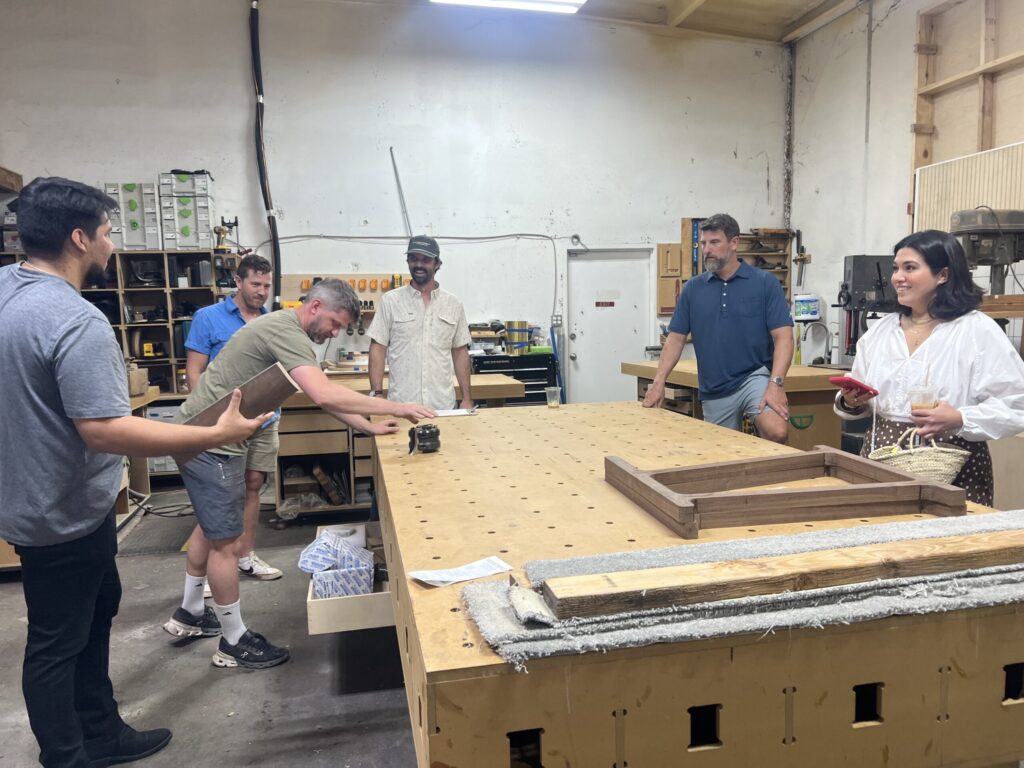
After the essential first stop for coffee, we began our day at Holdfast, a custom furniture maker with whom Yates Desygn has developed a close relationship over several projects.
Some of our most memorable furniture designs begin as sketches in our studio before making their way into the hands of talented craftspeople who know how to turn those ideas into physical objects. Holdfast has helped us bring a number of those pieces to life, including custom work created for our 2025 Kips Bay Decorator Show House Dallas space.
For our team, visiting their facility and seeing that process up close was invaluable.
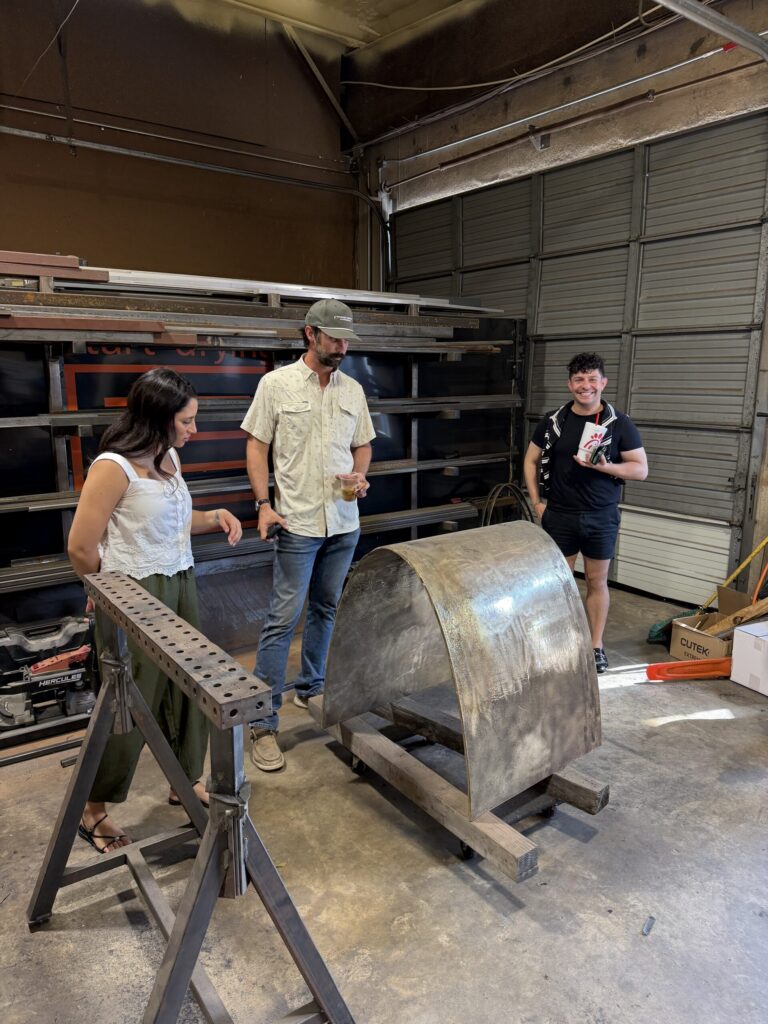
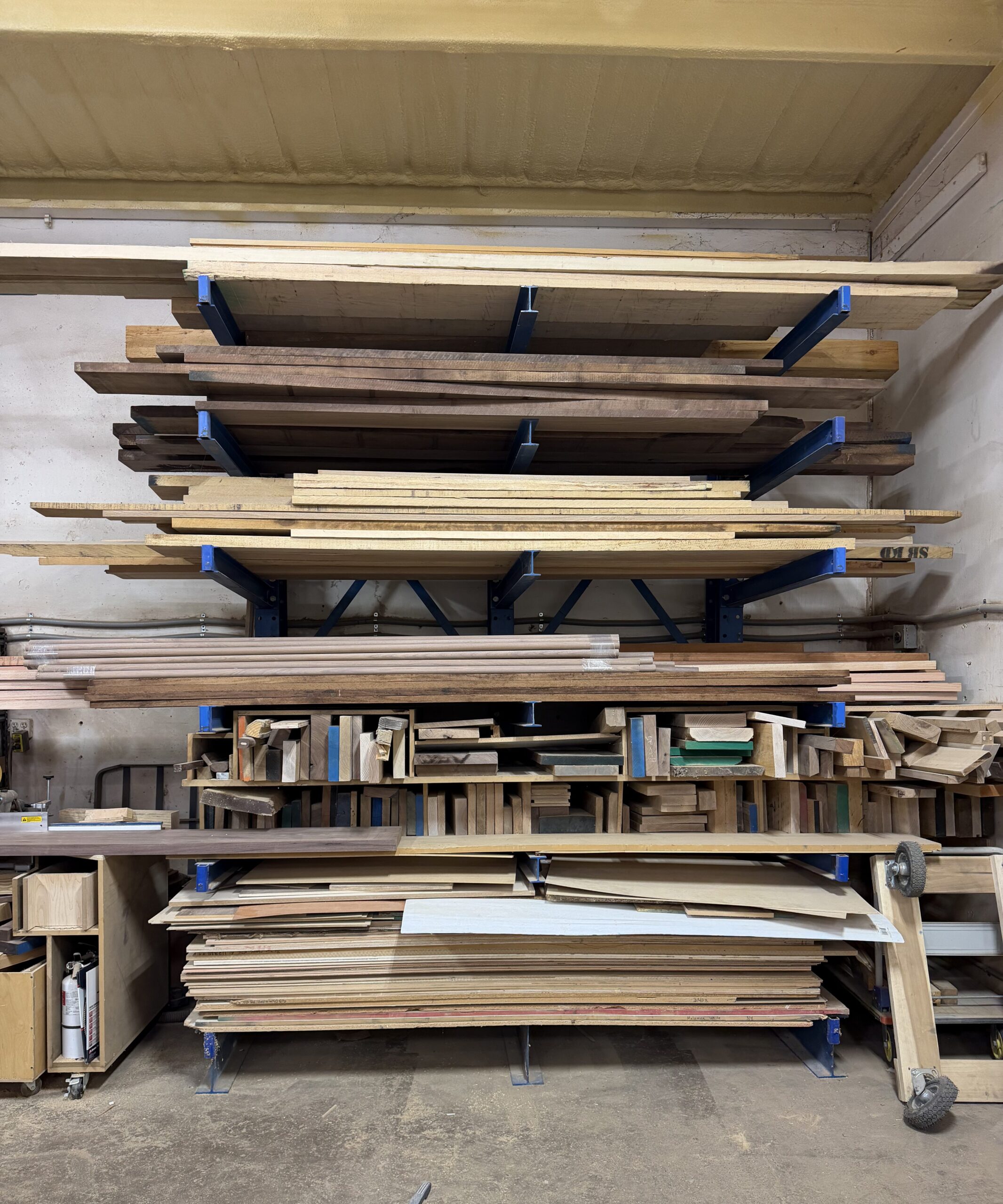
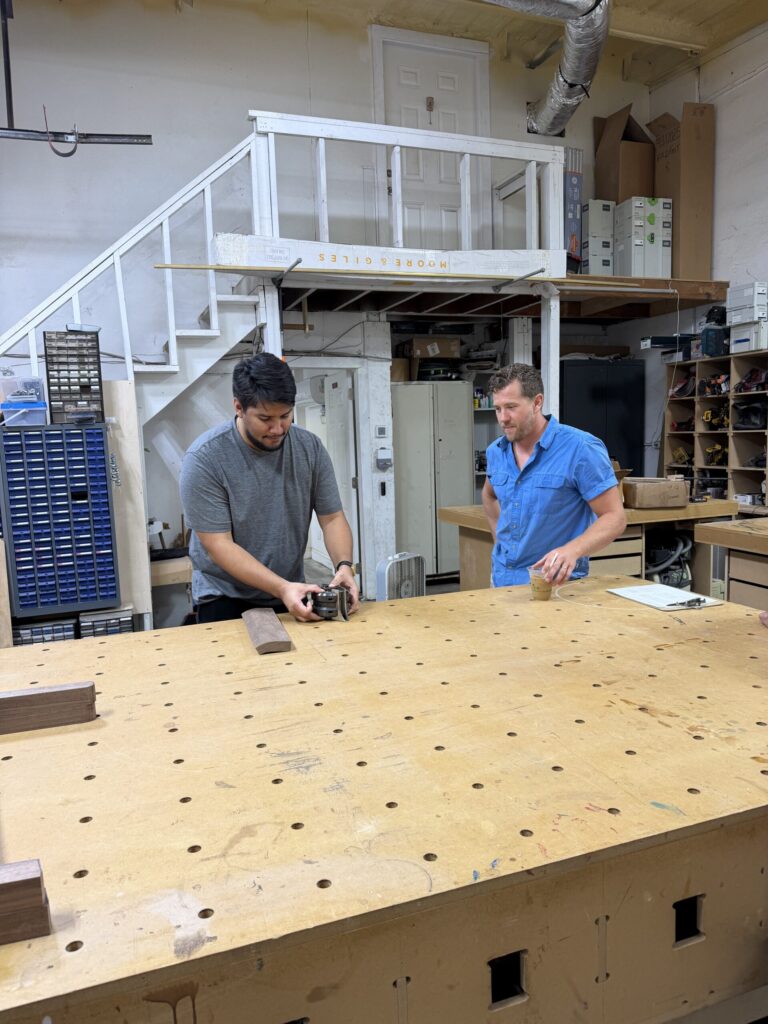
As designers, we spend an enormous amount of time thinking about proportion, material, finish, form, and function. But understanding how those decisions translate into fabrication gives us an entirely different perspective. Seeing the tools, techniques, materials, and problem-solving behind custom furniture reinforced just how collaborative the process truly is.
A line on a drawing eventually has to become a joint. A finish has to interact with the grain of the wood beneath it. A beautiful form also has to support weight, function properly, and hold up for years of use.
There is an incredible amount of knowledge behind making something look effortless.
Seeing the Holdfast team at work gave us a deeper appreciation for their craft and for the people who help make our custom designs possible. It was the perfect way to begin a day dedicated to learning from people who have mastered their disciplines.
From Holdfast, we stopped for a delicious lunch at Don Artemio before continuing into Fort Worth’s Cultural District for a special afternoon at the Kimbell Art Museum.
Experiencing the Kimbell Art Museum
There are buildings you can understand through photographs, and buildings you need to experience. The Kimbell Art Museum belongs firmly in the second category.
Our tour gave us the rare opportunity to experience not one but two architectural treasures: the original Louis I. Kahn Building and the Renzo Piano Pavilion.
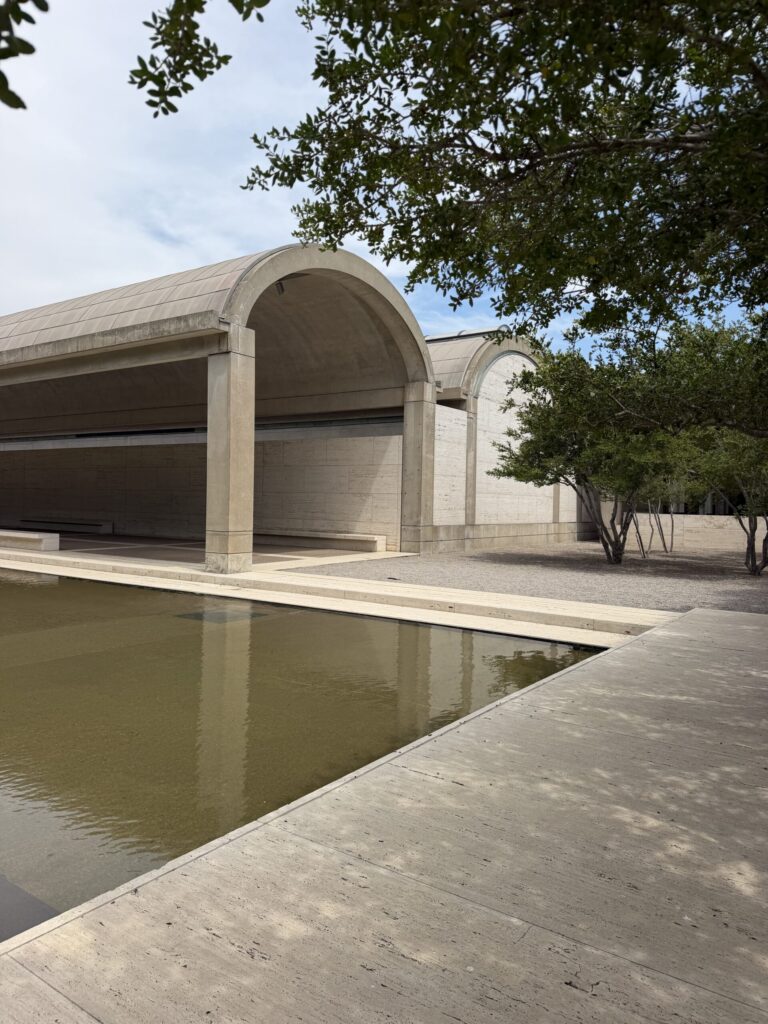
Kahn’s original museum opened in 1972 and is widely regarded as one of the great achievements of modern architecture. Its iconic cycloid vaults, restrained palette of concrete, travertine, white oak, metal, and glass, and extraordinary use of natural light create galleries that feel both monumental and remarkably intimate.
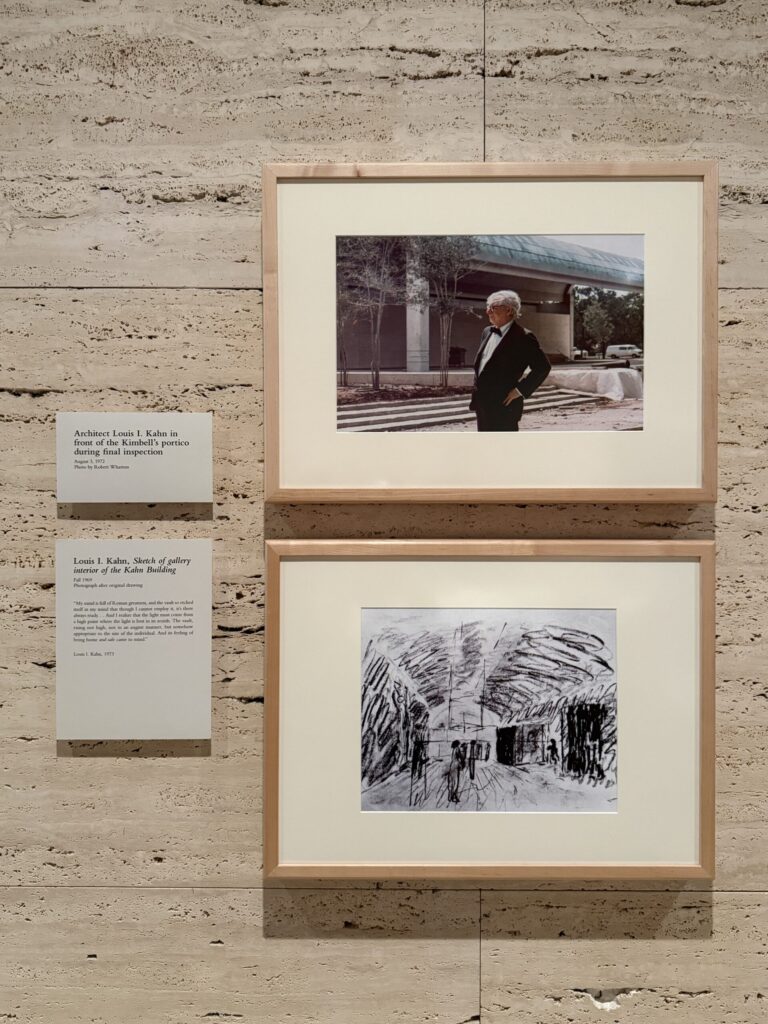
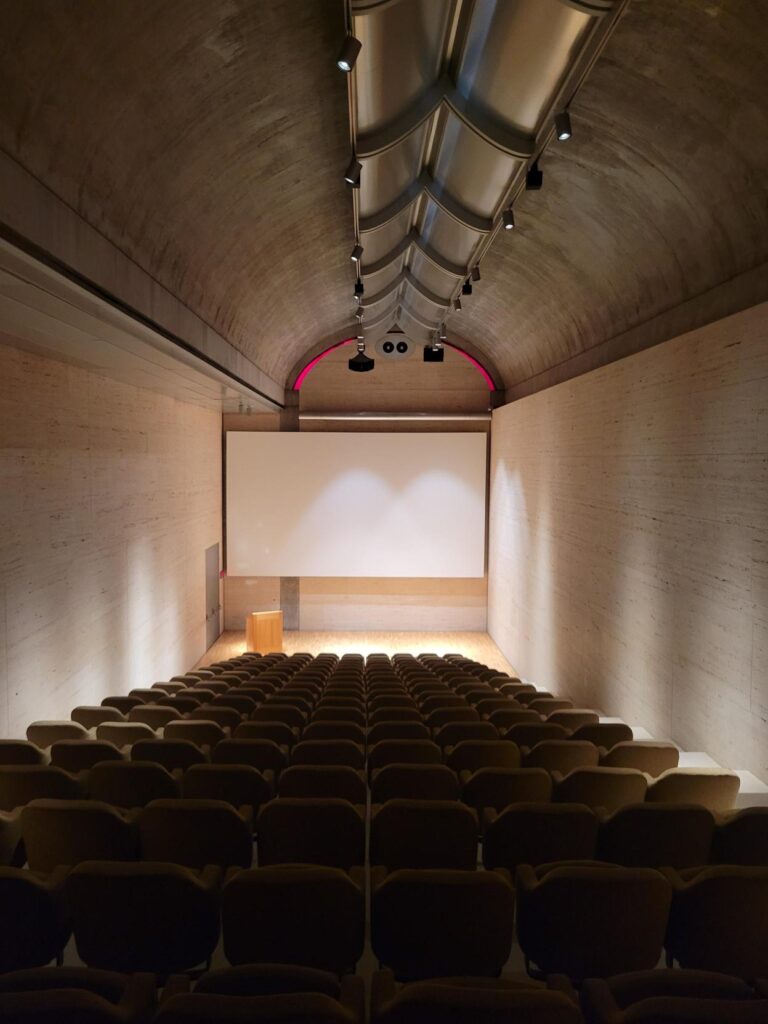
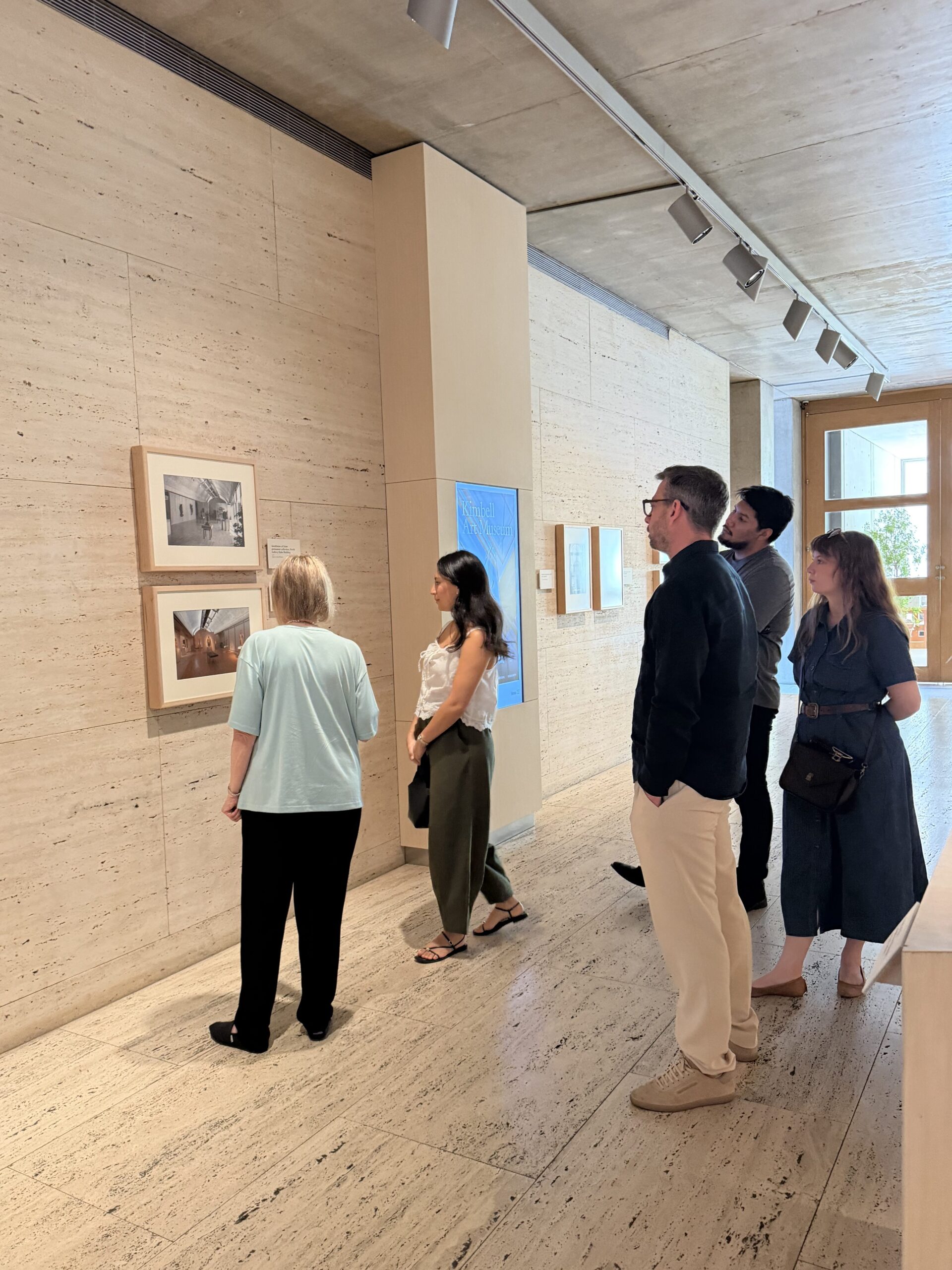
Natural light was fundamental to Kahn’s vision. Narrow skylights and specially designed reflectors diffuse the Texas sun across the curved vaults, letting light become part of the architecture itself. Rather than simply illuminating the art, it shapes the entire experience of moving through the museum.
Across the lawn, the Renzo Piano Pavilion, completed in 2013, offers a fascinating architectural conversation with Kahn’s masterpiece. Piano responded to the original building rather than imitating it, creating a low, light-filled structure of glass, concrete, and wood that shares Kahn’s emphasis on natural light and material honesty while speaking an entirely different architectural language. Its glass roof appears to float above massive laminated wood beams, giving the pavilion a sense of remarkable lightness.
Experiencing the two buildings together was one of the highlights of our day. Kahn’s architecture feels grounded, weighty, and almost timeless, while Piano’s pavilion feels transparent and light. Yet both show how carefully considered materials, proportions, and natural light can completely shape the way we experience a space.
You notice the meeting of two materials, the scale of a column, the warmth of wood against concrete, and the way daylight moves across a surface. These are details a photograph can capture, but never fully communicate.
For designers, getting up close with architectural treasures of this caliber is invaluable.
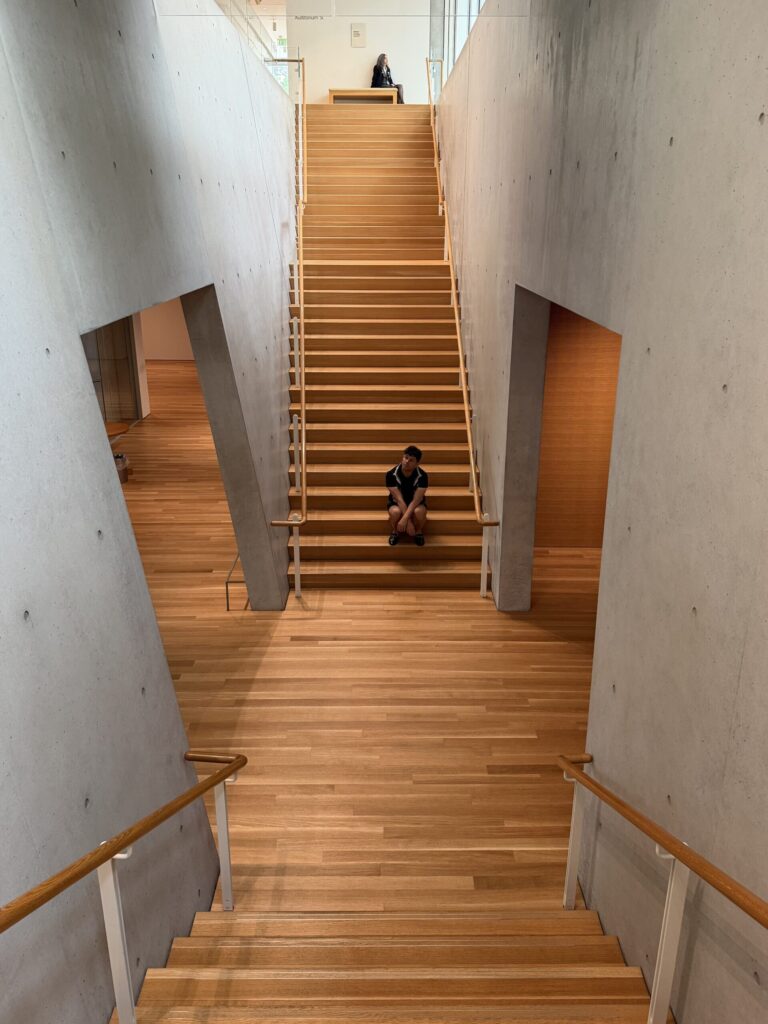
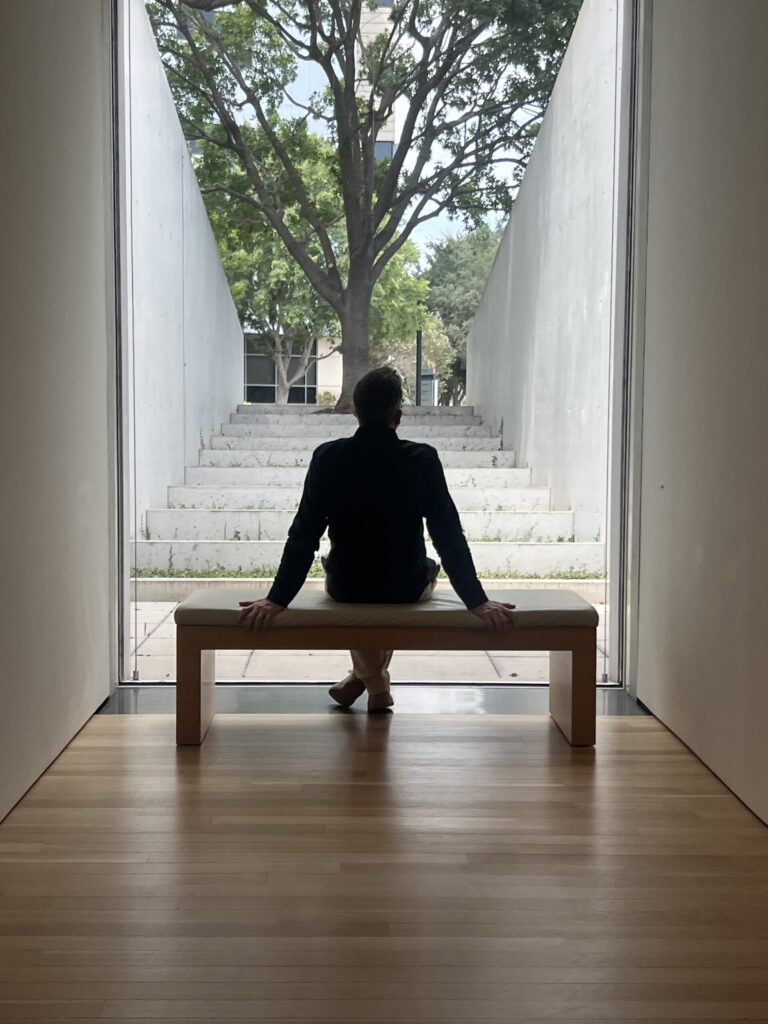
Our sincere thanks to Drew, Nicole, Dr. Doland, and the entire Kimbell team for sharing their knowledge and giving us such a memorable experience. Seeing both the Kahn and Piano buildings this way made the afternoon incredibly special.
Ending the Day at Bowie House
Our final stop brought together many of the themes we had experienced throughout the day: architecture, interiors, art, craftsmanship, and hospitality.
We headed to Bowie House for a tour followed by happy hour.
Located on Camp Bowie Boulevard in Fort Worth’s Cultural District, Bowie House is part of the Auberge collection and offers a distinctly Fort Worth take on contemporary luxury. Designed by Dallas-based architecture and interiors firm BOKA Powell, the property blends traditional Texas references with Spanish architectural influences and a more contemporary point of view.
What struck us immediately was how little it felt like a conventional hotel.
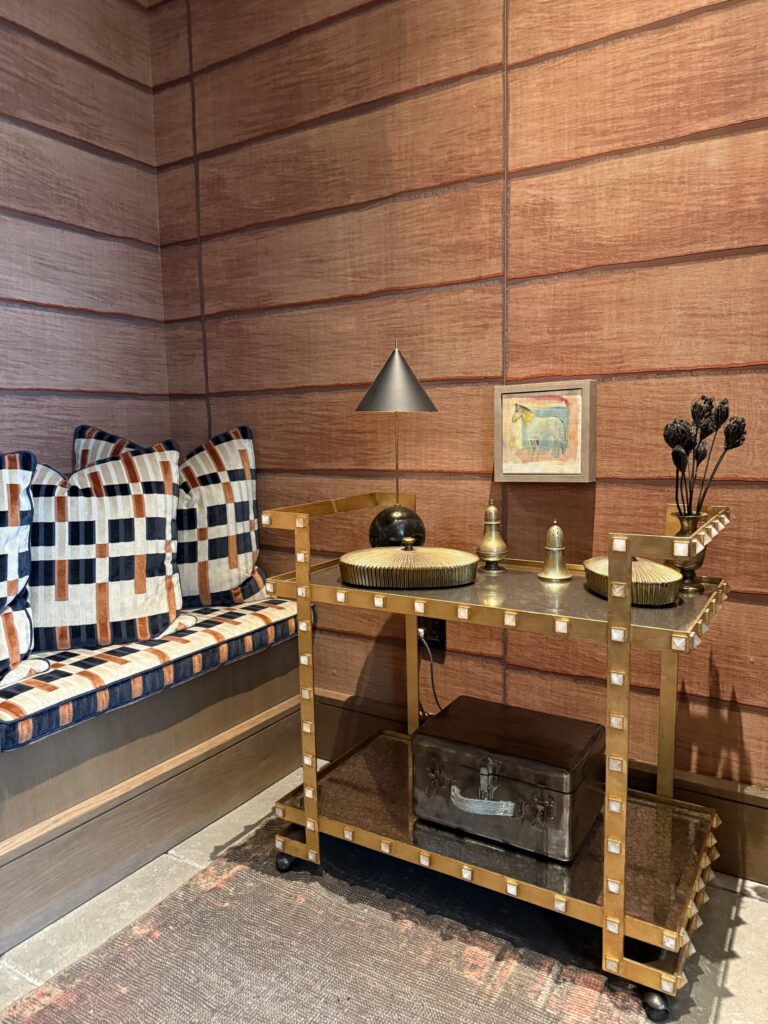
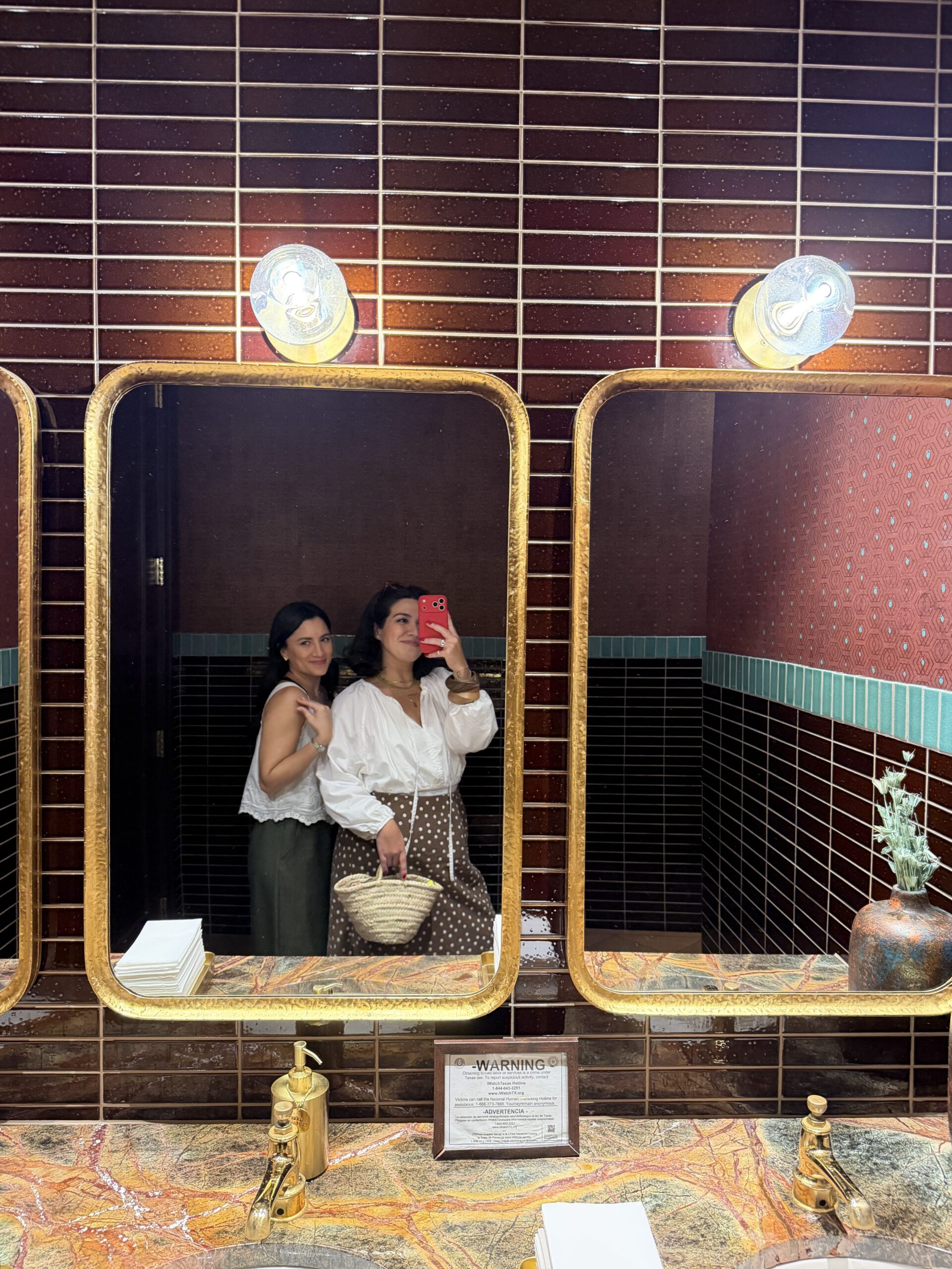
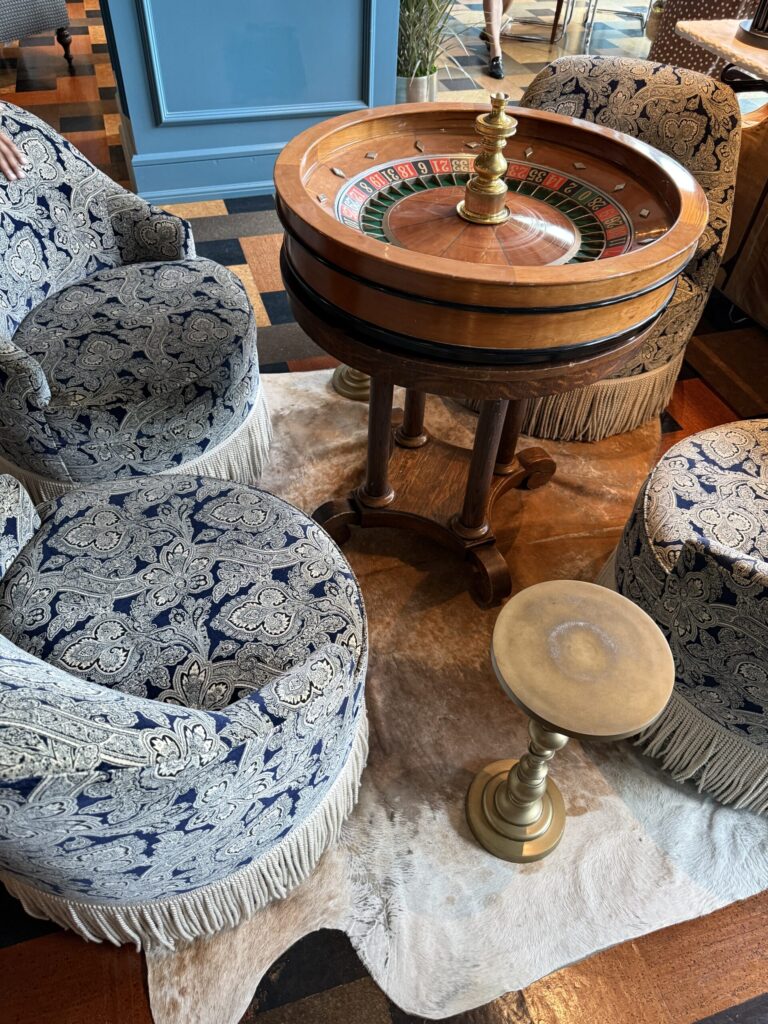
Despite its scale, Bowie House has the feeling of being welcomed into an exceptionally designed private residence. Rather than one enormous hospitality environment, the property unfolds as a series of individual spaces, with furniture that feels thoughtfully collected, art woven naturally throughout, and layers of materials that bring warmth and character without making the interiors feel overly formal. That residential quality was particularly interesting to us.
Hospitality design often has to solve an unusual challenge: creating spaces that serve hundreds or thousands of people while still making each person feel individually welcomed. At Bowie House, that sense of intimacy comes through in the scale of the rooms, the richness of the materials, the art, and the way the social spaces have been organized.
Throughout the property, the hotel’s modern interpretation of the West is present without becoming thematic. The references feel sophisticated and confident. There is a sense of place, but also a sense that the interiors have evolved naturally over time.
The art collection adds another layer entirely. Works are integrated throughout the hotel’s communal spaces rather than treated as an afterthought, reinforcing the feeling that you are experiencing a personal collection within a private home.
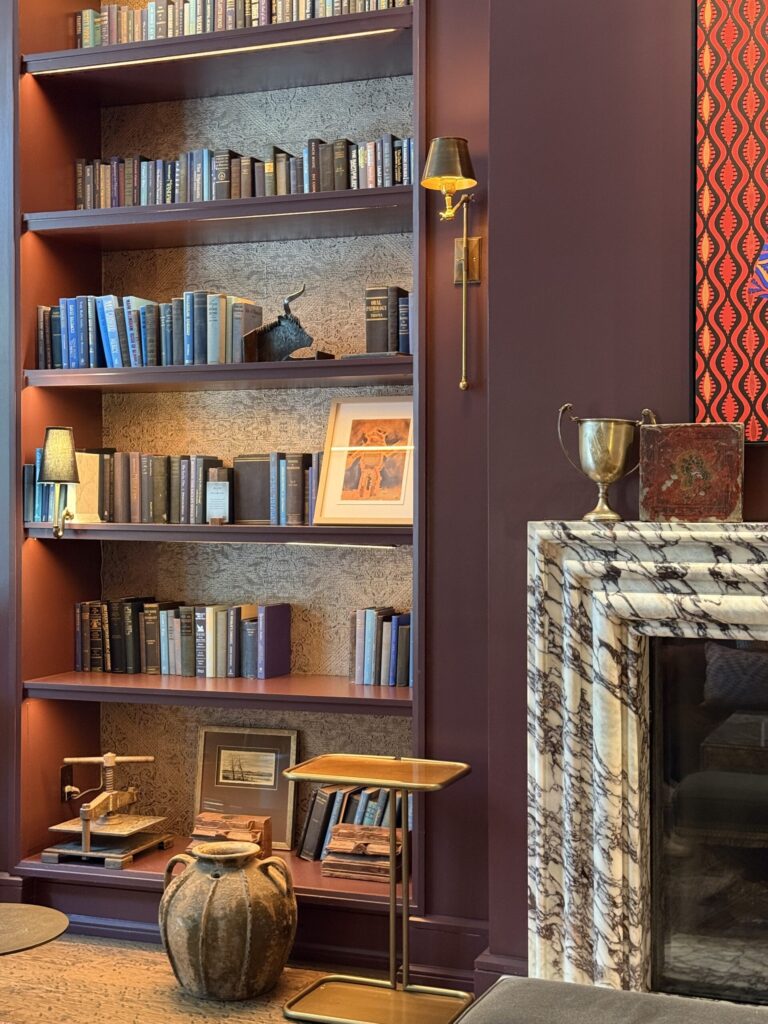
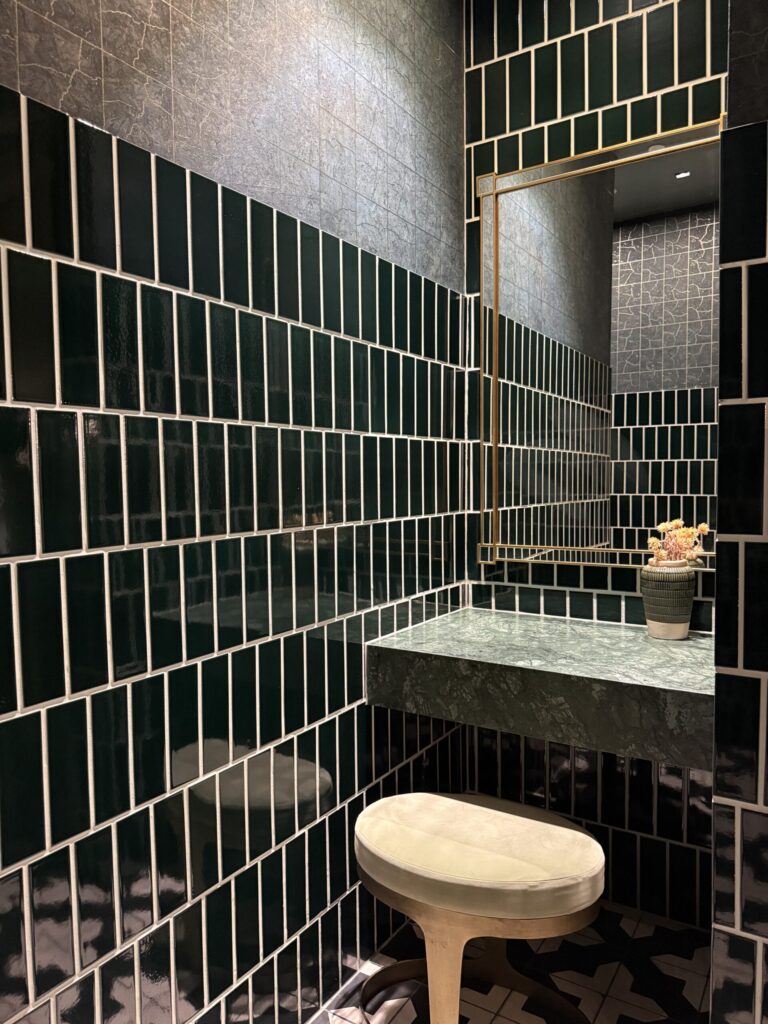
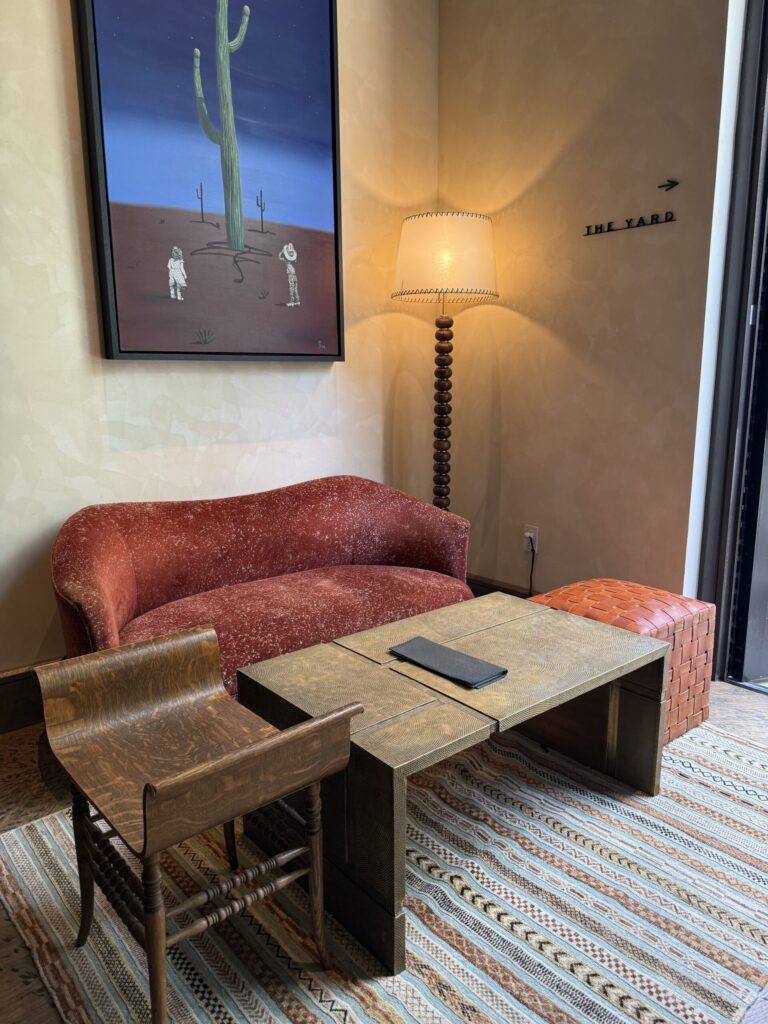
It was a wonderful example of something we talk about often at Yates Desygn: art and interiors are most powerful when they aren’t competing with one another. The architecture, furniture, materials, objects, and artwork should feel like parts of the same story.
We ended our tour with happy hour, the perfect conclusion to a day spent looking, learning, and talking about design.
A very special thank you to Daya, Shem, Andrew, and the entire Bowie House team for welcoming us so graciously and sharing the property with our team.
Bringing Inspiration Back to the Studio
By the end of the day, we had moved from a furniture workshop to one of the world’s great works of modern architecture, and finally to one of Fort Worth’s most distinctive luxury hotels.
On the surface, they are very different places, but each offered a lesson about the same thing: the power of intention.
At Holdfast, we saw intention expressed through craftsmanship and construction. At the Kimbell, we experienced two masters of architecture exploring material, proportion, and natural light across generations. At Bowie House, we saw how architecture, interiors, art, and hospitality can work together to create a genuine sense of place. Those experiences become part of what we bring back to the studio.
Team building, for us, isn’t simply about taking a day away from work. It’s about making space for curiosity, continuing to learn from the talented people around us, experiencing exceptional design firsthand, and reminding ourselves to stay observant.
Great design requires technical knowledge and experience, but it also requires curiosity.
And sometimes, renewing that curiosity is as simple as getting out of the studio, heading west, and spending a day absorbing the extraordinary creativity happening right in our own backyard.